FreeWare Piaggio P-180 Avanti version 2.0 by Mario Noriega
This is a very nice looking aircraft and flys well as long as you follow it's rules. Taking time to go through the readme file to understand it's flight characteristics is a must if you want to enjoy the flight and not fight the plane. I fly with all the realism sliders to the max so I'm not sure how easy it is to fly on lower settings
The basics:
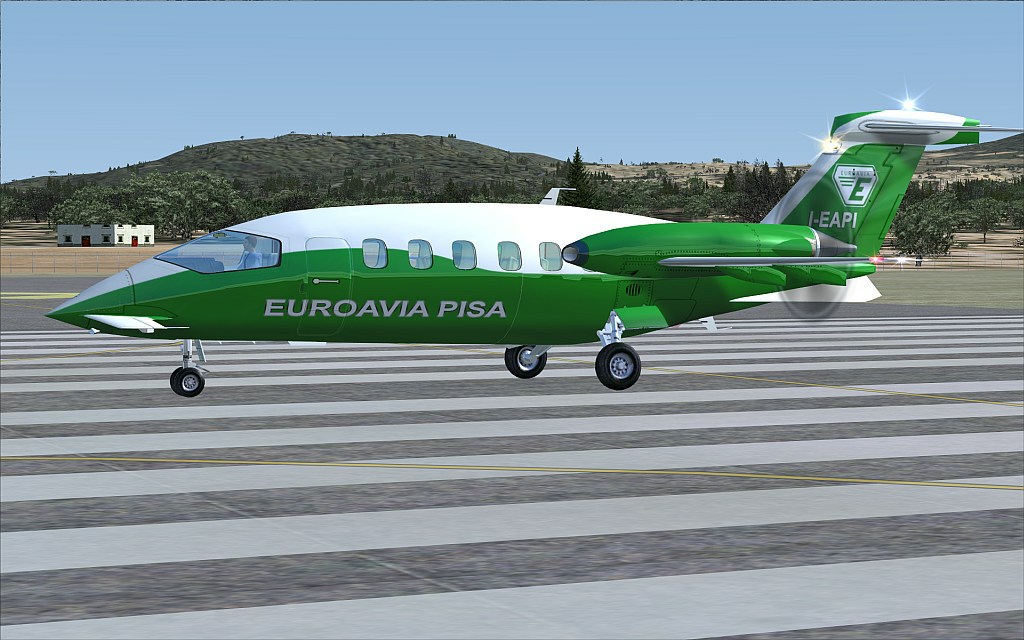
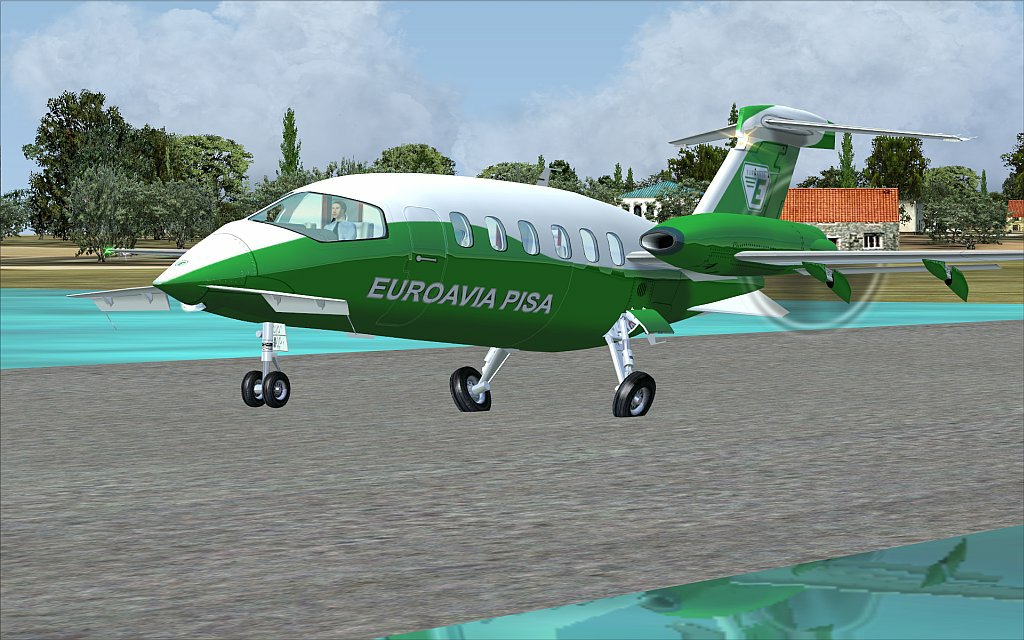
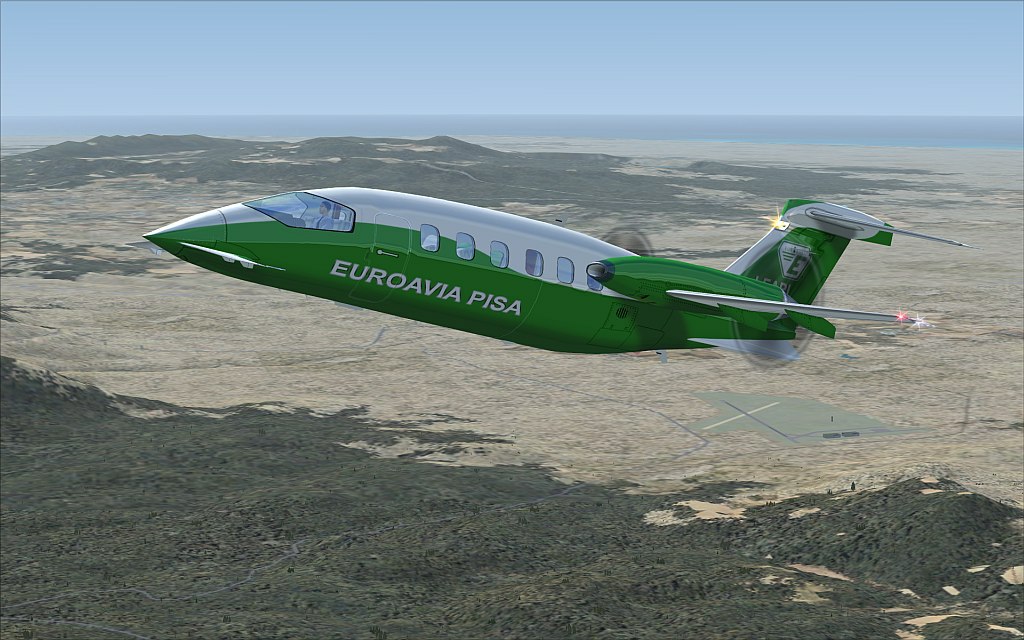
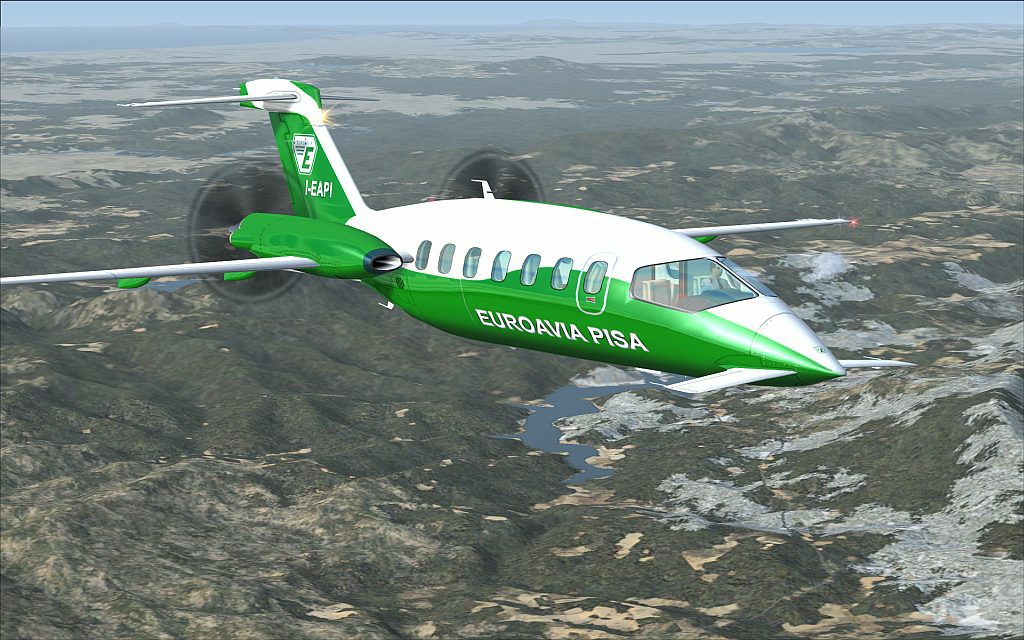
I found this aircraft on Avsim.com. Update: It can also be found here at the V. The P-180 is a pusher style 2 engine turboprop with a canard on the nose. There are 10 different liveries provided in the package. For this review I used the Euroavia Pisa fictional livery because I like green. The quality of the paint is excellent. The graphics are clear with nice reflection characteristics.
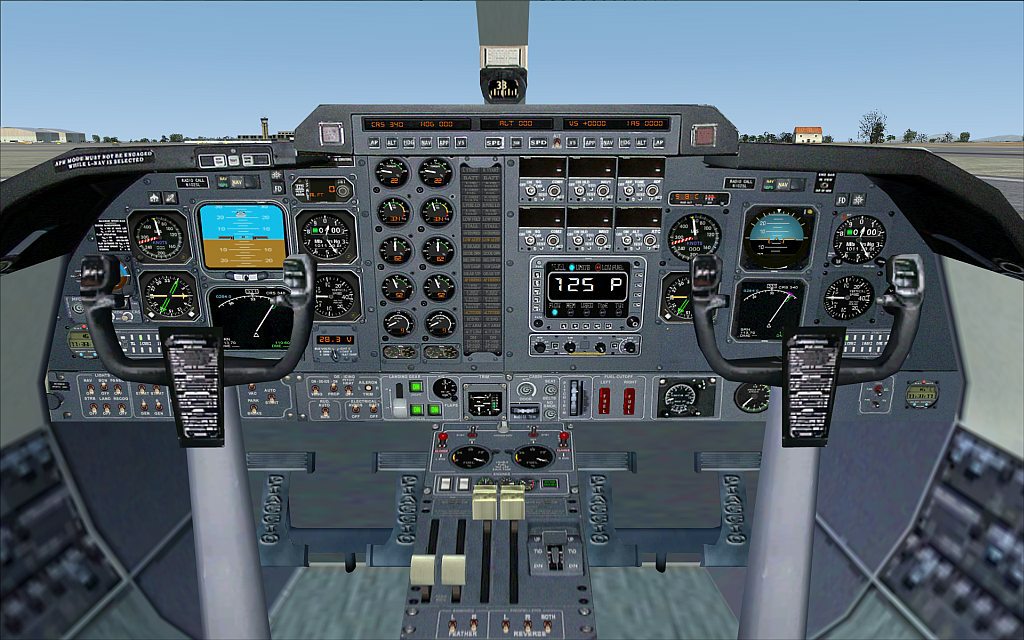
The aircraft comes with a good VC and there are lots of working guages and switches. There is a panel but I don't normally fly that way so I can't say anything about it.
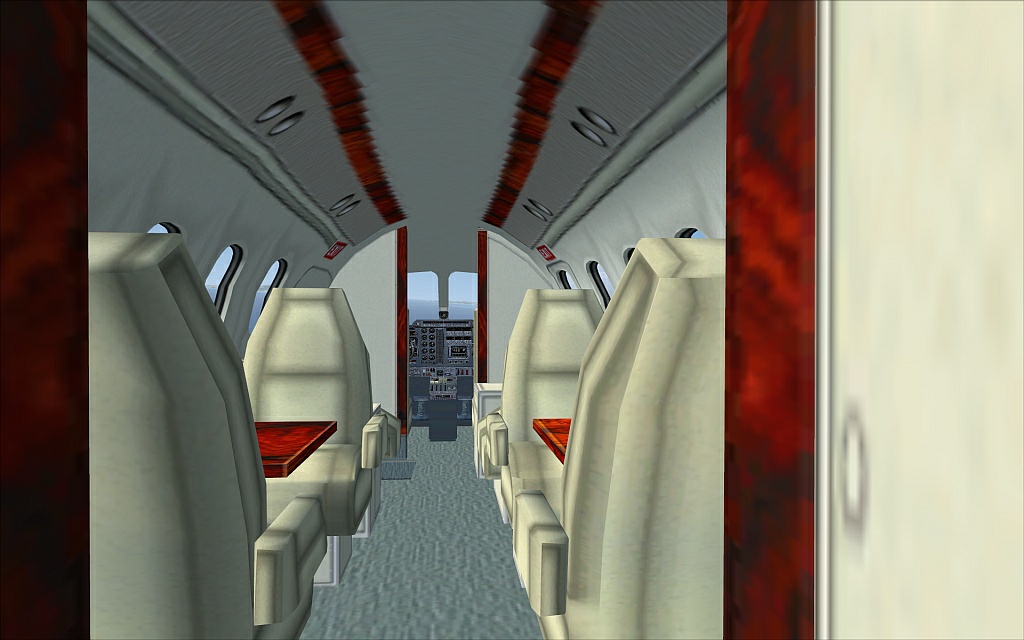
The passenger area is also modeled well and you can wander through at will. The only preprogrammed internal view is from the left seat.
From inside the engines sound a bit like the King Air but are different enough in various flight conditions to make them interesting. From the outside it sounds very good.
Take off:
You definitely need to read the manual for this bird. Normal rotate speed is 106 kias. However, with a full load it will be higher. Flaps are suggested for takeoff and even then the nose is heavy. I suggest not going with the default elevator trim but I need to experiment more to find a good setting. The author suggests leaving the takeoff flaps set until you reach 180-200 kias. The plane behaves well during the takeoff roll with only small corrections needed to stay lined up.
Climb/Descent:
Now this was even more interesting. One minute everything seems stable and smooth and then all hell breaks loose from buffeting to rolling and yawing about. Again you must read the manual as different power, attitude, and speeds affect how she flies. Even with no changes to the configuration it can result in issues as the plane settles into the configuration you have chosen. A stall seems very stable however with the nose gently dropping on it's own and very little roll. Once the nose drops the speed builds and you are flying again. You definitely need to release backpressure on the stick or you will continue the stall or stall it again. There are no speed brakes and you can overspeed quickly with very little effort during a descent. Since you can use the first notch of flaps in the 200 kias area they can be used to keep your descent speed down but not in check. You must pay attention to your attitude to manage your speed.
Cruise:
Read the manual. Once you are at your crusing altitude and have trimmed it out well, it flys very nice. Turbulence can create interesting moments and throw everything out of whack but it was easy to get everything back to normal with little work.
Landing:
Read the manual. I'm starting to sound like a broken record. You must watch your approach speed and fly by the numbers. If you fly by feel or how it "looks" you will probably crash.
Conclusion:
This is definitely not a plane for beginners. If you are new and want to try this plane I suggest you have the realism settings on easy. While not easy to fly I found it was fun and I'm looking forward to learning how to fly it well. Chao.

 Pages: 1


